

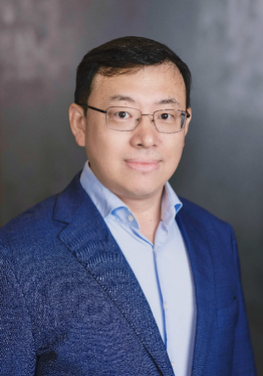
Wei Zhang
The University of New South Wales, Australia
Wei Zhang (F’15) is a professor at the University of New South Wales, Sydney, Australia. He was Vice President of IEEE Communications Society between 2022 and 2025. In July 2026, he was elected as IEEE Communications Society President-Elec. His research interests include 6G communications and networks. He has been an IEEE Fellow since 2015 and was an IEEE ComSoc Distinguished Lecturer in 2016-2017. Within the IEEE ComSoc, he has taken many leadership positions including Chair of Wireless Communications Technical Committee (2019-2020), Vice Director of Asia Pacific Board (2016-2021), Editor-in-Chief of IEEE Wireless Communications Letters (2016-2019), Member-at-Large on the Board of Governors (2018-2020), Technical Program Committee Chair of APCC 2017 and ICCC 2019 and 2024, Award Committee Chair of Asia Pacific Board and Award Committee Chair of Technical Committee on Cognitive Networks. He received the IEEE Communications Society Joseph LoCicero Award in 2024. He obtained the Ph.D. degree from the Chinese University of Hong Kong in 2005.
This talk addresses the challenge of resource allocation in user-centric cell-free massive MIMO systems. Conventional methods rely heavily on instantaneous channel state information, which requires real-time pilot measurements and generates substantial backhaul overhead. To overcome this limitation, we construct a radio map as a network surrogate that predicts the expected downlink rates of user equipment from their positions, under dynamic access point selection and power allocation strategies. Our technical contributions are threefold. First, we target rate prediction by adopting a divide-and-conquer strategy that decomposes rate prediction into signal and interference power prediction. Second, we employ a graph-based representation where access points and users form a bipartite graph, naturally capturing dynamic associations and adapting to varying network configurations. Third, we introduce a Transformer-based multi-head attention mechanism to accurately model the heterogeneous influences of neighboring nodes on the target user. Simulations on the DeepMIMO dataset demonstrate that our radio map significantly outperforms state-of-the-art methods in rate prediction accuracy across various signal-to-noise ratio regimes and user densities, providing an interpretable, scalable surrogate for predictive resource allocation.