

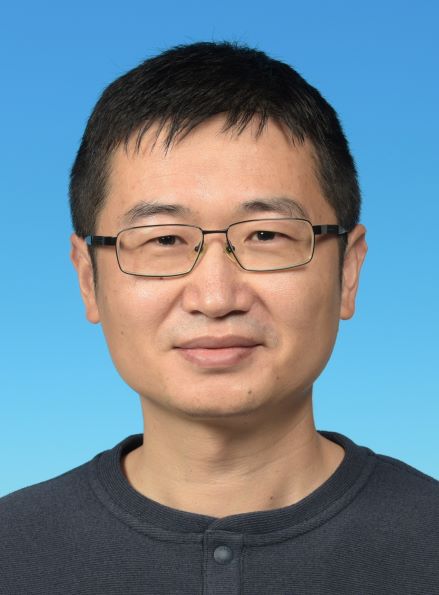
Jun Zhang
Hong Kong University of Science and Technology, Hong Kong SAR, China
Jun Zhang received his Ph.D. degree in Electrical and Computer Engineering from the University of Texas at Austin. He is an IEEE Fellow and Clarivate Highly Cited Researcher. He is a Professor in the Department of Electronic and Computer Engineering at the Hong Kong University of Science and Technology. His research interests include integrated communications and AI, generative AI, and edge AI systems. He is a co-recipient of several best paper awards, including the 2021 Best Survey Paper Award of IEEE Communications Society, the 2019 IEEE Communications Society & Information Theory Society Joint Paper Award, and the 2016 Marconi Prize Paper Award in Wireless Communications. He also received the 2016 IEEE ComSoc Asia-Pacific Best Young Researcher Award. He is an Area Editor of IEEE Transactions on Wireless Communications (leading the area of Machine Learning and Artificial Intelligence) and IEEE Transactions on Machine Learning in Communications and Networking (leading the area of Distributed Learning and AI at the Network Edge).
Wireless networks are evolving from communication-centric systems to environment-aware intelligent infrastructures, characterized by dense deployments, dynamic operation, and tight integration with immersive applications such as sensing and robotics. This shift motivates a new paradigm—spatial intelligence for wireless (SI4Wireless)—where wireless systems learn, represent, and reason about their underlying 3D geometry to achieve scalable, adaptive, and generalizable functionalities. This talk will outline a pathway toward spatially intelligent wireless infrastructures for 6G and beyond. We will start by applying 3D Gaussian splatting, a prevalent technique for 3D scene reconstruction, for wireless field reconstruction (WRF-GS), and then develop a unified radio-optical radiation field for 3D radio map construction (URF-GS). We will also introduce the latest development in foundation models for cross-scene radio fields (Point2Radio), enabling generalization across diverse scenarios.