

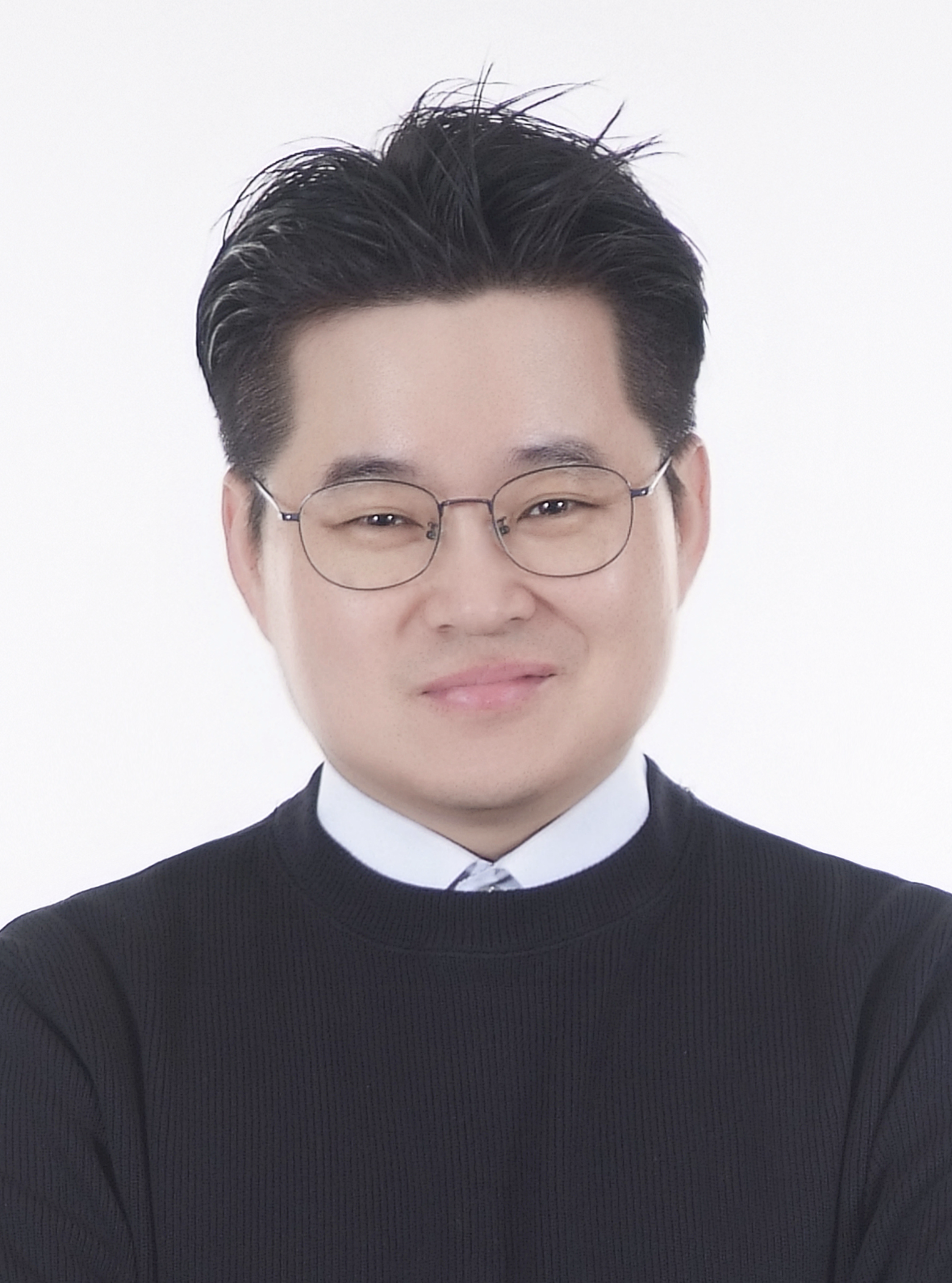
Howon Lee
Ajou University, South Korea
Howon Lee received the B.S., M.S., and Ph.D. degrees in Electrical and Computer Engineering from the Korea Advanced Institute of Science and Technology (KAIST), Daejeon, South Korea, in 2003, 2005, and 2009, respectively. From 2009 to 2012, he was a senior research staff/team leader of the knowledge convergence team at the KAIST Institute for Information Technology Convergence (KI-ITC). From 2012 to 2024, he was with the School of Electronic and Electrical Engineering and the Institute for IT Convergence (IITC) at Hankyong National University (HKNU), Anseong, South Korea. Since 2024, he has been with the Department of Electrical and Computer Engineering at Ajou University, Suwon, South Korea. He has also experienced as a Visiting Scholar with the University of California, San Diego (UCSD), La Jolla, CA, USA, in 2018. His current research interests include B5G/6G wireless communications, ultra-dense distributed networks, in-network computations for 3D images, cross-layer radio resource management, reinforcement learning for UAV and satellite networks, unsupervised learning for wireless communication networks, and Internet of Things. Dr. Lee is the recipient of the Joint Conference on Communications and Information (JCCI) 2006 Best Paper Award and of the Bronze Prize at Intel Student Paper Contest in 2006. Dr. Lee is also the recipient of the Telecommunications Technology Association (TTA) Paper Contest Encouragement Award in 2011, of the Best Paper Award at the Korean Institute of Communications and Information Sciences (KICS) Summer Conference in 2015, of the Best Paper Award at the KICS Fall Conference in 2015, of the Honorable Achievement Award from 5G Forum Korea in 2016, of the Best Paper Award at the KICS Summer Conference in 2017, of the Best Paper Award at the KICS Winter Conference in 2018, of the Best Paper Award at the KICS Summer Conference in 2018, of the Best Paper Award at the KICS Winter Conference in 2020, and of the Haedong Grand Prize at the KICS Summer Conference in 2022, and of the Haedong Grand Prize at the KICS Winter Conference in 2023. He received the Minister's Commendation by the Minister of Science and ICT in 2017 and 2025.
In this talk , we propose a collaborative DRL(CDRL)-based resource management method for LEO satellite networks. To address high satellite mobility and resource constraints, the proposed method jointly optimizes transmit power and frequency reuse factors to maximize energy efficiency. By incorporating inter-satellite information sharing, it effectively mitigates training data scarcity during collaborative learning. Simulation results demonstrate that the proposed CDRL approach achieves superior energy efficiency compared to partial-sharing CDRL, non-collaborative DRL, and federated learning methods, without increasing computational complexity.