

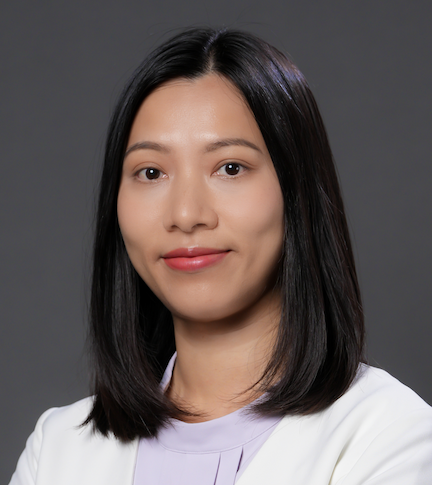
Edith C. H. Ngai
The University of Hong Kong, Hong Kong SAR, China
Edith C.H. Ngai is currently an Associate Professor in the Department of Electrical and Computer Engineering, The University of Hong Kong. Before joining HKU in 2020, she was an Associate Professor in the Department of Information Technology, Uppsala University, Sweden. Her research interests include Internet-of-Things, edge intelligence, and smart cities. She was a VINNMER Fellow awarded by Swedish Governmental Research Funding Agency VINNOVA in 2009. Her co-authored papers received a Best Paper Award in QShine 2023, Best Paper Runner-Up Awards in IEEE IWQoS 2010 and ACM/IEEE IPSN 2013, and Best paper candidate in ACM BuildSys 2024. She was an Area Editor of IEEE Internet of Things Journal from 2020 to 2022. She is currently an Associate Editor in IEEE Transactions of Mobile Computing, IEEE Network, and Computer Networks. She served as a program chair in ACM womENcourage 2015 and a TPC co-chair in IEEE SmartCity 2015, IEEE GreenCom 2022, IEEE/ACM IWQoS 2024, IEEE CloudCom 2025, and ACM/IEEE SEC 2026. She received a Meta Policy Research Award in Asia Pacific in 2022. She was selected as one of the N²Women Stars in Computer Networking and Communications in 2022. She was a Distinguished Lecturer in IEEE Communications Society in 2023-2024. She was elevated to ACM Distinguished Member in 2025.
This seminar will provide an overview of trustworthy network intrusion detection, from representation learning to agentic reasoning. Label noise presents a significant challenge in network intrusion detection, leading to erroneous classifications and decreased detection accuracy. First, we reveal the impact of noisy labels on intrusion detection models from a causal perspective, attributing performance degradation to local feature consistency across network traffic categories. Then, we present CoLD, a Collaborative Label Denoising framework for network intrusion detection. CoLD partitions the original feature set into multiple subsets and employs Local Joint Learning to disrupt local consistency, compelling the encoder to learn fine-grained and robust representations. It further applies Causal Collaborative Denoising to detect and filter noisy labels by analyzing causal divergences between multiple representations and their potentially true label, yielding a purified dataset for training a noise-resilient classifier. In the last part of the talk, we present OR2- MAS, a retrieval-augmented multi-agent framework designed to improve the robustness and efficiency of intelligent reasoning services through state-aware orchestration. OR2-MAS coordinates retrieval and multi-agent reasoning through a global reasoning state, enabling adaptive routing, failure-aware redundancy, and dynamic control of reasoning depth.