

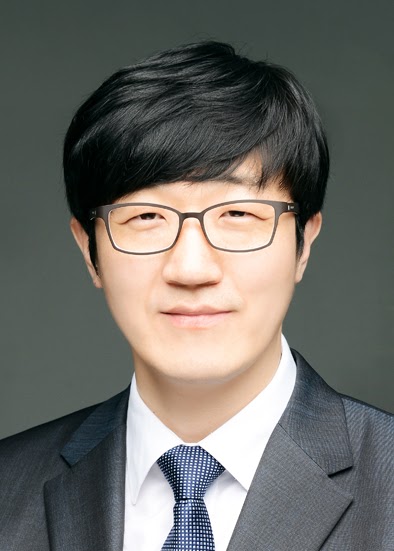
Bang Chul Jung
Ajou University, South Korea
Bang Chul Jung is a Professor in the Department of Electrical and Computer Engineering at Ajou University, South Korea. He received his B.S. degree from Ajou University in 2002 and his M.S. and Ph.D. degrees from KAIST in 2004 and 2008, respectively. Before joining Ajou University, he held faculty positions at Gyeongsang National University and Chungnam National University. He currently serves as a Senior Editor of IEEE Vehicular Technology Magazine and an Associate Editor of IEEE Open Journal of the Communications Society. He served as TPC Chair of IEEE CCNC 2023 and General Chair of IEEE CCNC 2025. His honors include the IEEE Communications Society Asia-Pacific Outstanding Young Researcher Award, the 2024 Commendation Award from Korea’s Minister of Science and ICT, and the 2026 IEEE Communications Society Certificate of Merit. His research interests include 6G wireless communications, multi-antenna and multiple-access techniques, interference management, wireless localization, and machine learning.
Fluid antenna systems offer a flexible approach to exploiting spatial channel variations within a compact aperture. This talk introduces fluid antenna multiple access (FAMA) and explores how digital multiport reception can enhance interference suppression in multiuser wireless networks. A central challenge is selecting a fixed number of active ports from a large set of candidates under a limited radio-frequency-chain budget. To address this combinatorial problem, we present a cross-entropy optimization framework that adaptively samples feasible port subsets and refines the sampling distribution using high-performing candidates. Each subset is evaluated with minimum mean-square-error combining, jointly accounting for desired-signal strength, inter-user interference, spatial correlation, and receive-combining gain. Simulation results show that the proposed approach closely approaches exhaustive-selection performance in tractable settings and improves spectral efficiency, outage probability, and symbol error rate relative to conventional selection methods. The talk will also discuss computational complexity and the implications of efficient port selection for scalable fluid antenna receivers in next-generation wireless networks.