

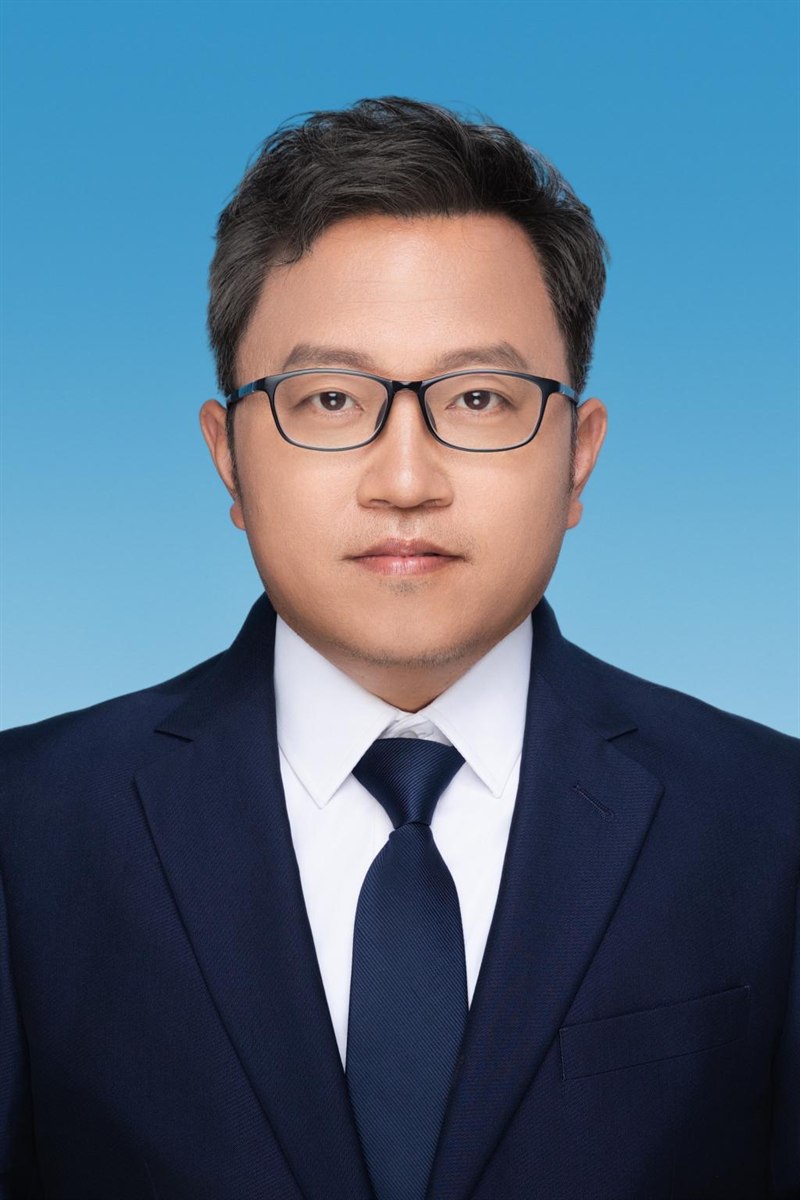
Xingwang Li
Henan Polytechnic University, China
Xingwang Li received the M.Sc. degree from the University of Electronic Science and Technology of China in 2010 and the Ph.D. degree from Beijing University of Posts and Telecommunications in 2015. From 2010 to 2012, he was an Engineer at Comba Telecom Ltd., Guangzhou, China. From 2017 to 2018, he spent one year as a Visiting Scholar at Queen’s University Belfast, Belfast, U.K. He is currently a Professor with the School of Physics and Electronic Information Engineering, Henan Polytechnic University, Jiaozuo, China. His research interests include wireless communication, intelligent transport systems, artificial intelligence, and the Internet of Things. He serves on the Editorial Board of IEEE Transactions on Wireless Communications, IEEE Transactions on Communications, and IEEE Transactions on Vehicular Technology etc.
Large language models (LLMs) offer new opportunities for adaptive resource management in wireless networks, while network operation provides feedback for improving their control capabilities. This talk explores a recursive self-improvement framework for UAV-assisted integrated sensing and communication networks, where position uncertainty, interference, and backhaul constraints complicate resource allocation. A base-station-side LLM jointly allocates communication power, sensing energy, and continuous beamforming parameters to improve delivered throughput. Operational feedback guides the construction of targeted training scenarios. Physics-prediction-assisted group relative policy optimization combines short-term predictions with residuals from full-rollout returns to update the control policy. Candidate training plans undergo equal-budget trial training, and their learning gains guide subsequent plan generation. We discuss how shared model adaptation connects resource control with autonomous training, highlighting the challenges of physical consistency, computational efficiency, and reliable deployment.